

14128 W Newberry Road STE. 40
Newberry, FL 32669

Diabetes and Blurry Vision: Why Changes Need an Eye Exam

If you have diabetes, blurry vision can sometimes seem to come and go without an obvious explanation. Changes in blood sugar can temporarily affect how clearly you see, but diabetes can also cause changes inside the eye that require professional monitoring.
At Hedges Eye Care in Newberry, we provide comprehensive and medical eye care for patients with diabetes. An eye exam can help determine whether blurry vision is related to temporary focusing changes, diabetic eye disease, a changing prescription, or another eye health concern.
How Can Blood Sugar Affect Your Vision?
Changes in blood glucose can temporarily alter fluid levels within structures of the eye, which may affect focusing and cause blurry or fluctuating vision.
You might notice that your glasses suddenly do not seem as effective or that your vision changes during periods when blood sugar levels are shifting. In some cases, clarity may improve again as glucose levels become more stable.
For this reason, a sudden prescription change does not always mean you immediately need new glasses. If diabetes is involved, it is important to evaluate both your vision and eye health before assuming the prescription is the only issue.
What Is Diabetic Retinopathy?
Diabetic retinopathy develops when diabetes damages the small blood vessels in the retina, the light-sensitive tissue at the back of the eye.
Damaged vessels may leak, swell, close off, or eventually lead to the growth of abnormal new blood vessels. One of the challenges is that early diabetic retinopathy may not cause noticeable symptoms.
As the condition progresses, possible symptoms can include:
Blurry or fluctuating vision
New or increasing floaters
Dark or empty areas in your vision
Difficulty seeing fine details
Reduced or distorted vision
Because early changes can occur before you notice a problem, regular diabetic eye exams remain important even when your vision seems normal.
Why Does a Diabetic Eye Exam Matter?
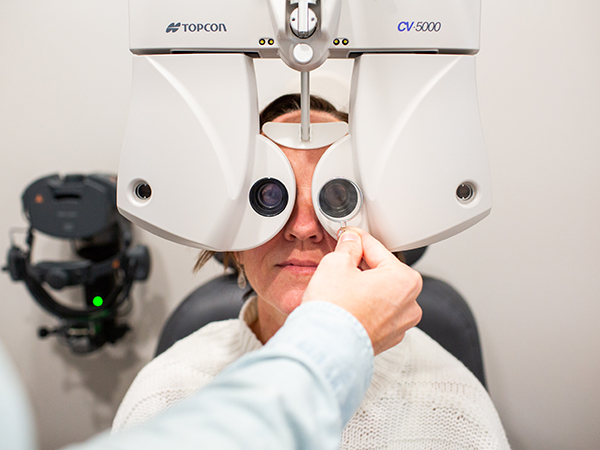
A routine prescription check tells us how clearly you see, but a diabetic eye exam also focuses closely on the health of the retina and other internal eye structures.
At our Newberry practice, we may evaluate the retina, macula, optic nerve, and blood vessels while also checking your prescription and overall eye health.
Pupil dilation may be recommended so we can obtain a broader view of the retina. Depending on your findings, additional testing or imaging may also be appropriate.
The goal is to identify changes early and determine whether routine monitoring, closer follow-up, or referral for additional treatment is needed.
How Often Should Your Eyes Be Checked?
People with diabetes generally need regular comprehensive dilated eye examinations, often at least once each year. Your recommended schedule may differ depending on your type of diabetes, how long you have had it, previous retinal findings, pregnancy status, and overall health.
If diabetic retinopathy is already present, more frequent monitoring may be recommended.
Managing blood sugar, blood pressure, and cholesterol according to your healthcare team's recommendations can also help support long-term eye health.
When Should Blurry Vision Be Evaluated Promptly?
Do not assume every vision change is simply caused by fluctuating blood sugar. Persistent or worsening blur deserves an eye examination, especially if it affects one eye more than the other or occurs with additional symptoms.
Sudden vision loss, flashes of light, a rapid increase in floaters, or a curtain-like shadow across your vision requires urgent evaluation rather than waiting for your next routine appointment.
If diabetes is causing changes in your vision or you are due for a diabetic eye exam, contact Hedges Eye Care at 14128 W Newberry Road, Suite 40, Newberry, FL 32669 by calling (352) 306-1103 to schedule an appointment.
Powered by
